TGA Testing Services – Thermal Stability, Decomposition Behavior & Material Composition Analysis
Shanghai Jituotech Material Technology Co., Ltd. provides professional TGA (Thermogravimetric Analysis) testing services for a wide range of material systems, including polymers, plastics, rubber, chemicals, inorganic ceramics, metals, composites, fine chemicals, and biomaterials.
TGA measures changes in sample mass as a function of temperature or time under controlled testing conditions. It is widely used to investigate thermal stability, thermal decomposition, volatilization, oxidation behavior, and high-temperature residual mass.
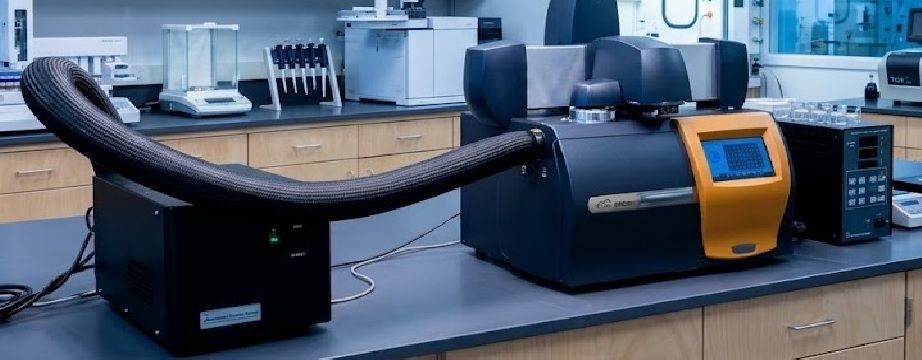
Using a Mettler TGA2 thermogravimetric analyzer, Jituotech develops testing programs based on sample characteristics and research objectives. Our services provide analytical data to support material development, raw material evaluation, formulation optimization, process research, and quality control.
TGA Testing Services Overview
Thermogravimetric Analysis (TGA) is a thermal analysis technique that continuously measures sample mass changes as a function of temperature or time under a controlled atmosphere.
Jituotech's TGA testing services help answer key material characterization questions:
- At what temperature does a material begin to lose mass? Evaluate thermal stability and the onset of thermal decomposition.
- How many mass-loss stages occur during heating? Investigate moisture release, solvent evaporation, additive volatilization, and multi-stage decomposition.
- How much mass is lost within a specific temperature range? Quantify mass loss and evaluate volatile or thermally decomposable components.
- How much material remains after heating? Determine residual mass and, where appropriate, support ash or inorganic filler analysis.
- How does the material behave under different atmospheres? Compare mass changes under inert and oxidative conditions, such as nitrogen and air.
TGA Testing Equipment and Available Parameters
| Item | Available Information |
|---|---|
| Instrument | Mettler TGA2 |
| Temperature range | Room temperature to 1500°C |
| Temperature accuracy | ±0.01°C |
| Heating rate | 0.1–100°C/min |
| Atmosphere | Nitrogen (N₂), air |
| Sample forms | Solid and liquid |
| Recommended sample quantity | 20–100 mg |
| Typical data output | TG and DTG curves, test data; report format subject to project requirements |
Actual test conditions, including temperature range, atmosphere, and heating program, should be confirmed according to sample properties, testing objectives, and instrument safety requirements.
What Is TGA (Thermogravimetric Analysis)?
TGA stands for Thermogravimetric Analysis. It is a thermal analysis technique used to measure changes in the mass of a sample under controlled temperature and atmospheric conditions.
During a TGA test, a sample is placed in a testing crucible and heated according to a programmed temperature profile. A high-precision balance continuously records changes in sample mass during heating, cooling, or isothermal testing.
Mass changes may occur due to moisture evaporation, solvent volatilization, thermal decomposition, oxidation, reduction, desorption, or other physical and chemical processes.
How Does TGA Work?
- A suitable amount of sample is weighed and placed in a testing crucible.
- The temperature program and testing atmosphere are configured according to the testing objective.
- The instrument heats the sample under controlled conditions.
- The balance continuously records sample mass changes.
- TG data are collected, and DTG curves can be calculated from the mass-change data.
- The results are interpreted based on mass-loss stages, characteristic temperatures, mass-loss percentages, and residual mass.
What Is the Difference Between TG and DTG Curves?
- TG curve (Thermogravimetry): Shows sample mass or mass percentage as a function of temperature or time. It is used to identify mass-loss stages, mass-loss onset, and final residual mass.
- DTG curve (Derivative Thermogravimetry): Shows the rate of mass change as a function of temperature or time. It helps identify maximum mass-loss rate temperatures and distinguish different decomposition stages.
Combining TG and DTG curves provides a more comprehensive understanding of a material's thermal decomposition behavior.
What Properties Can TGA Measure? Typical Applications of TGA
TGA is primarily used to investigate mass changes during heating. Depending on the sample and test conditions, it can provide information on the following properties.
1. Thermal Stability
TGA evaluates thermal stability by analyzing the onset of mass loss, temperatures corresponding to specified mass-loss percentages, and mass changes across different temperature ranges.
Typical applications include:
- Thermal stability evaluation of polymer materials;
- Heat resistance comparison of plastics and rubber;
- Thermal stability studies of coatings, adhesives, and resins;
- Screening and comparison of raw materials and formulations.
2. Thermal Decomposition Temperature and Decomposition Behavior
TGA identifies major mass-loss stages during heating and helps characterize decomposition onset, maximum mass-loss rate temperature, and multi-stage decomposition behavior.
Typical applications include:
- Thermal decomposition studies of polymers;
- Thermal stability evaluation of cured resins;
- Decomposition analysis of composite material matrices;
- Thermal behavior studies of fine chemicals.
3. Moisture, Solvent, and Volatile Content
Mass loss within selected low-temperature or other defined temperature ranges can provide information about moisture, residual solvents, and other volatile components.
Typical applications include:
- Moisture and volatile-content studies of powders;
- Investigation of residual solvent-related mass loss in chemical materials;
- Volatilization studies of coatings, adhesives, and resins;
- Drying and thermal mass-loss evaluation of biomaterials.
4. Ash Content and Inorganic Residue Analysis
Under suitable atmospheric and temperature conditions, TGA can measure residual mass after thermal decomposition or oxidation. This information may support the evaluation of ash content, inorganic fillers, and other non-volatile residues.
Typical applications include:
- Inorganic filler analysis in rubber and plastics;
- Residual inorganic content evaluation in polymer composites;
- Thermal treatment studies of ceramic powders and inorganic materials;
- Residue analysis of carbon-based and composite materials.
5. Oxidation Stability and Oxidation Behavior
By changing the testing atmosphere, TGA can investigate differences in mass-change behavior under inert and oxidative conditions.
Typical applications include:
- Oxidative decomposition studies of polymers;
- Oxidation stability evaluation of carbon materials;
- Thermal oxidation studies of lubricants and organic materials;
- Comparison of material stability in air.
6. Thermal Mass-Loss Behavior of Multicomponent Materials
When different components volatilize or decompose within distinguishable temperature ranges, TG and DTG curves can be used to investigate the mass-loss behavior of individual stages.
Typical applications include:
- Polymer blends;
- Filled rubber and plastics;
- Resin-based composites;
- Organic-inorganic hybrid materials;
- Multicomponent fine chemicals.
What Materials Can Be Tested by TGA?
Jituotech provides TGA testing services for a broad range of material categories.
| Material Category | Typical Testing Objectives |
|---|---|
| Polymers | Thermal stability, decomposition behavior, residual mass |
| Plastics and rubber | Polymer decomposition, volatile content, filler and ash analysis |
| Resins and adhesives | Thermal stability after curing, volatilization, decomposition behavior |
| Chemical materials | Thermal mass-loss behavior, solvent volatilization, thermal stability |
| Inorganic ceramics | Adsorbed moisture, water of crystallization, loss on heating |
| Metals and metal-related materials | Oxidation-related mass gain, thermal reactions, mass-change behavior |
| Composite materials | Matrix decomposition, inorganic residues, multi-stage mass loss |
| Fine chemicals | Volatilization, thermal decomposition, thermal stability |
| Biomaterials | Moisture loss, thermal decomposition, thermal stability |
| Carbon materials | Oxidation behavior, thermal stability, residual mass |
Which Samples May Require Special Assessment Before TGA Testing?
The following samples require prior safety evaluation:
- Samples that may explode or undergo violent reactions within the testing temperature range;
- Samples that may release highly toxic or corrosive gases;
- Samples that may splatter, eject, or volatilize violently;
- Samples containing large amounts of low-boiling solvents or free water without appropriate pretreatment;
- Samples that may contaminate, corrode, or cause irreversible damage to the instrument.
Before submitting a sample, please provide its name, major components, expected testing temperature, and known hazards. Our technical team can then assess testing feasibility.
TGA Instrument Technical Specifications
| Technical Parameter | Published Specification |
|---|---|
| Instrument model | Mettler TGA2 |
| Temperature range | Room temperature–1500°C |
| Temperature accuracy | ±0.01°C |
| Heating rate | 0.1–100°C/min |
| Testing atmosphere | Nitrogen (N₂), air |
| Sample forms | Solid and liquid |
| Recommended sample quantity | 20–100 mg |
These specifications are based on the TGA service information published on Jituotech's website. Actual testing conditions should be confirmed according to instrument configuration, sample characteristics, and project requirements.
TGA Sample Requirements and Submission Guidelines
Appropriate sample preparation helps ensure testing safety and data reliability.
| Item | Sample Requirement |
|---|---|
| Sample quantity | Recommended: 20–100 mg |
| Sample form | Solid or liquid |
| Packaging | Plastic centrifuge tube or another container confirmed by the technical team |
| Sample condition | Preferably homogeneous and free of significant agglomeration or phase separation |
| Moisture and solvents | Avoid large amounts of free water or low-boiling solvents unless these are the target of the study |
| Safety | Samples that may explode, react violently, or release highly toxic gases must not be submitted without prior assessment |
| Additional information | Sample name, major components, expected temperature range, atmosphere, and testing objective |
TGA Testing Process
TGA Testing Standards
TGA standards should be selected according to the material category and testing objective. Different standards are not automatically interchangeable.
The following standards are listed as relevant references on Jituotech's existing TGA service page:
| Standard | Standard Title or Application |
|---|---|
| ISO 247-2:2018 | Rubber — Determination of ash — Part 2: Thermogravimetric analysis (TGA) |
| ASTM D6370-23 | Standard Test Method for Composition Analysis of Rubber by Thermogravimetric Analysis (TGA) |
| ASTM D8474-23 | Standard Test Method for Recycled Carbon Black (rCB) — Composition Analysis by Thermogravimetric Analysis (TGA) |
| ASTM D6375-24 | Standard Test Method for Evaporation Loss of Lubricating Oils by the Noack Method Using a Thermogravimetric Analyzer (TGA) |
| ASTM D3850-19 | Standard Test Method for Rapid Thermal Degradation of Solid Electrical Insulating Materials by Thermogravimetry (TGA) |
| ASTM E2105-00(2024) | Standard Practice for General Techniques of Coupling Thermogravimetric Analysis (TGA) with Infrared Analysis (TGA/IR) |
| IEC TS 62607-6-18:2022 | Nanomanufacturing — Key Control Characteristics — Functional Groups of Graphene-Based Materials: TGA-FTIR |
These are reference standards listed on Jituotech's existing website. Their applicability to a specific project should be checked against the standard's scope, current edition, sample type, and method requirements.
Standard TGA Testing vs. Customized TGA Testing
- Standard testing: Follows the sample preparation, instrument conditions, temperature program, and calculation methods specified in the selected standard.
- Customized testing: Uses test conditions developed for a specific research objective, such as a selected temperature range, heating rate, or comparison under different atmospheres.
For testing intended for product certification, quality acceptance, or regulatory evaluation, please confirm the applicable standard, test items, and reporting requirements before placing an order.
TGA vs. Other Thermal Analysis Techniques
Different thermal analysis instruments measure different physical properties. TGA focuses on mass changes, DSC measures heat-flow differences, DMA evaluates dynamic mechanical properties, and TMA measures dimensional changes or deformation.
| Instrument | Full Name | Main Measurement | Typical Applications |
|---|---|---|---|
| TGA | Thermogravimetric Analyzer | Mass change | Mass loss, thermal decomposition, volatile content, residual mass |
| DSC | Differential Scanning Calorimeter | Heat-flow difference | Glass transition, melting, crystallization, curing, thermal events |
| DMA | Dynamic Mechanical Analyzer | Dynamic mechanical response | Storage modulus, loss modulus, damping, glass transition |
| TMA | Thermomechanical Analyzer | Dimensional change and deformation | Thermal expansion, softening, shrinkage, thermomechanical response |
| STA/SDT | Simultaneous Thermal Analyzer | Mass change and heat flow | Simultaneous investigation of mass changes and thermal effects |
Should You Choose TGA or DSC?
Choose TGA when the research objective involves mass loss, volatilization, thermal decomposition, ash content, or residual mass.
Choose DSC when the objective involves glass transition, melting, crystallization, curing reactions, or enthalpy changes.
For complex material systems, TGA and DSC can be complementary. TGA provides information about mass changes, while DSC reveals thermal events and heat-flow behavior. Combining the two techniques can provide a more comprehensive understanding of material thermal properties.
Three Typical TGA Testing Case Studies
The following are representative application examples designed to illustrate TGA testing strategies, data types, and curve interpretation. They are not disclosed Jituotech client projects or actual customer test results. Actual results depend on sample formulation, testing atmosphere, heating rate, and instrument conditions.
Case Study 1: Thermal Stability and Inorganic Filler Analysis of Polymer Composites
Test Sample: Polymer composite containing inorganic fillers.
Testing Objectives:
- Evaluate the thermal stability of the polymer matrix;
- Investigate mass-loss behavior across different temperature ranges;
- Determine high-temperature residual mass to support the evaluation of inorganic components.
Testing Method:
- Perform programmed-temperature TGA testing;
- Analyze polymer matrix decomposition under nitrogen;
- Where appropriate, add an air-atmosphere test to investigate oxidation behavior;
- Interpret different mass-loss stages using TG and DTG curves.
Data and Curves Obtained:
- TG mass-change curve;
- DTG derivative curve;
- Major mass-loss stages and corresponding temperatures;
- Mass-loss percentages at different stages;
- Final residual mass percentage.
Image suggestion:

Key Interpretation: Mass changes across different temperature ranges can help characterize polymer matrix decomposition. Final residual mass can support the evaluation of inorganic residues. Accurate filler quantification requires consideration of filler chemistry, testing atmosphere, and possible reactions of the residual components.
Case Study 2: Composition and Thermal Decomposition Behavior of Rubber Materials
Test Sample: Rubber material or rubber compound formulation.
Testing Objectives:
- Investigate thermal decomposition behavior;
- Evaluate volatile components, polymer-related mass loss, and inorganic residues;
- Support formulation analysis, quality control, and batch comparison.
Testing Method:
- Develop a TGA temperature program based on sample characteristics;
- Analyze volatilization and thermal decomposition under an inert atmosphere;
- Where applicable, use an oxidative atmosphere to further investigate carbonaceous and inorganic residues;
- Interpret mass changes using TG and DTG curves.
Data and Curves Obtained:
- TG curve;
- DTG curve;
- Mass-loss percentages at different stages;
- Characteristic decomposition temperatures;
- Final residual mass.

Case Study 3: Thermal Mass Loss and Heat-Treatment Behavior of Inorganic Ceramic Powders
Test Sample: Inorganic ceramic powders, precursors, or hydrated inorganic materials.
Testing Objectives:
- Investigate mass loss associated with adsorbed moisture and water of crystallization;
- Study thermal decomposition of precursors;
- Evaluate mass changes during heat treatment to support sintering and thermal-processing research.
Testing Method:
- Select an appropriate temperature range according to sample characteristics;
- Conduct programmed-temperature testing under a suitable atmosphere;
- Record sample mass changes as a function of temperature;
- Identify mass-loss stages using TG and DTG curves.
Data and Curves Obtained:
- TG curve;
- DTG curve;
- Temperature ranges associated with moisture or water loss;
- Precursor decomposition temperature ranges;
- High-temperature residual mass.

Top 5 Frequently Asked Questions About TGA Testing
FAQ 1: What data can be obtained from a TGA test?
A TGA test typically provides TG and DTG curves, mass-loss percentages across selected temperature ranges, mass-loss onset temperature, maximum mass-loss rate temperature, and final residual mass.
The specific parameters available depend on the test program, sample properties, and data analysis requirements.
FAQ 2: How much sample is required for TGA testing?
Jituotech's published TGA service information recommends a sample quantity of 20–100 mg. Both solid and liquid samples may be considered.
The actual sample quantity should be confirmed based on sample homogeneity, testing objectives, crucible capacity, and safety considerations.
FAQ 3: Can TGA determine the decomposition temperature of a material?
Yes. TGA can characterize the onset of mass loss, temperatures corresponding to specified mass-loss percentages, and characteristic temperatures of different decomposition stages.
FAQ 4: Can TGA measure ash content, filler content, or inorganic components?
Under appropriate atmosphere, temperature program, and analytical conditions, TGA can provide information about final residual mass and mass changes across selected temperature ranges. These data may support ash and inorganic component analysis.
FAQ 5: What is the difference between TGA and DSC? Which technique should I choose?
TGA measures changes in sample mass during heating and is mainly used to investigate thermal stability, decomposition, volatile content, and residual mass.DSC measures heat-flow differences between a sample and a reference and is mainly used to study glass transition, melting, crystallization, curing, and enthalpy changes.