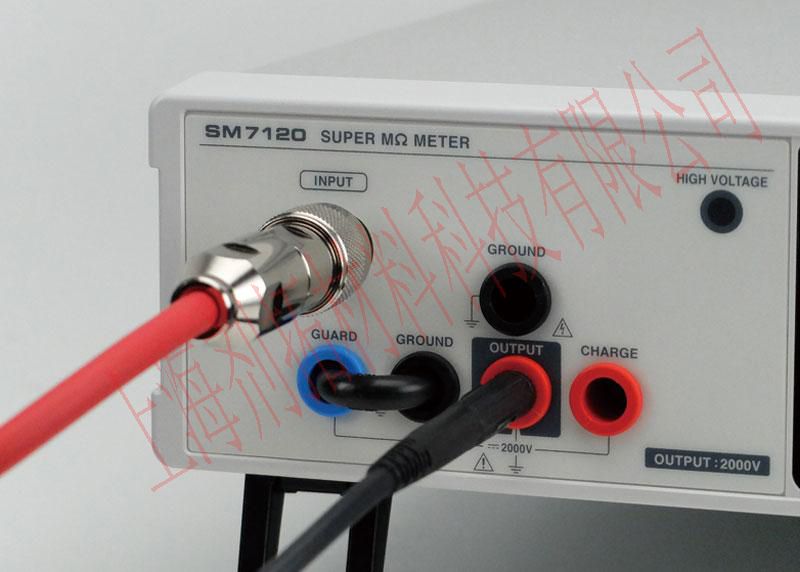
Shanghai Jituo provides high resistance meter testing and analysis services. High resistance meters are used to test the insulation resistance, surface resistance, volume resistance, high resistance values, volume resistivity, surface resistivity, and liquid resistivity of materials.
A high resistance meter is an instrument used to measure high resistance values (typically 10³Ω to 10¹⁷Ω), and its testing principle is mainly based on Ohm's law and weak current measurement technology. The resistance value is calculated by applying a voltage and measuring the current flowing through the tested resistor. The measurement of a high resistance meter is essentially an application of the "volt-ampere method," but it is specially designed for high-resistance scenarios:
**Voltage Application **
A known DC voltage (V) is applied to the tested resistor, typically ranging from tens of volts to thousands of volts (such as 50V, 100V, 1000V, etc., which can be adjusted as needed).
**Weak Current Measurement **
Due to the presence of a high-resistance resistor, the current (I) flowing through (R_x) is extremely weak (usually at the picoampere level, (10^{-12}A) order of magnitude), and it needs to be measured by a high-sensitivity current detection circuit (such as an electrometer tube, field-effect transistor (FET), or operational amplifier).
**Resistance Calculation **
According to Ohm's law (R_x = \frac{V}{I}), the resistance value is obtained by measuring the ratio of voltage to current.
Instrument Models and Parameters
- Instrument Model: High Resistance Meter SM7120
- Instrument Technical Parameters
- Resistance Range: 2×10¹⁹ Ω
Sample Submission Requirements and Packaging
- Liquid: No less than 40mL.
- Circular Sample: Diameter: 80mm ≤ d ≤ 100mm, Thickness ≤ 8mm
- Square Sample: Side Length 80mm ≤ a ≤ 100mm, Thickness ≤ 8mm