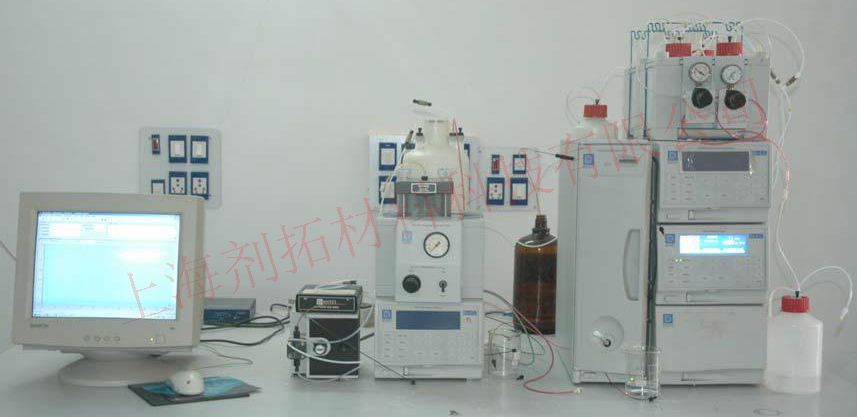
Ion Chromatography (IC) is a liquid chromatography method for analyzing anions and cations. It uses ion-exchange resins with low exchange capacity as the stationary phase to separate ionic substances, and a conductivity detector to continuously monitor changes in the effluent conductivity.
Instrument Model and Technical Parameters
- Instrument Model: Thermo Fisher AQUION RRC
- Technical Parameters:
-
- Maximum operating pressure: 35 Mpa (5000 psi)
-
- Pressure fluctuation: < 1.0%
-
- Flow rate range: 0.00–5.0 mL/min (increments of 0.01)
-
- Flow rate precision: < 0.1%
-
- Flow rate accuracy: < 0.1%
-
- Detectable anions: F⁻, Cl⁻, Br⁻, NO₂⁻, PO₄³⁻, NO₃⁻, SO₄²⁻, CO₃²⁻, citrate, formate, acetate, oxalate, etc.
-
- Detectable cations: Li⁺, Na⁺, NH₄⁺, K⁺, Ca²⁺, Mg²⁺, Cu²⁺, Zn²⁺, Fe²⁺, Fe³⁺, etc.
Sample Submission Requirements and Notes
- Sample form: Solid or liquid, with a mass of more than 10 mg.
- Solubility: Samples must be completely soluble in water.
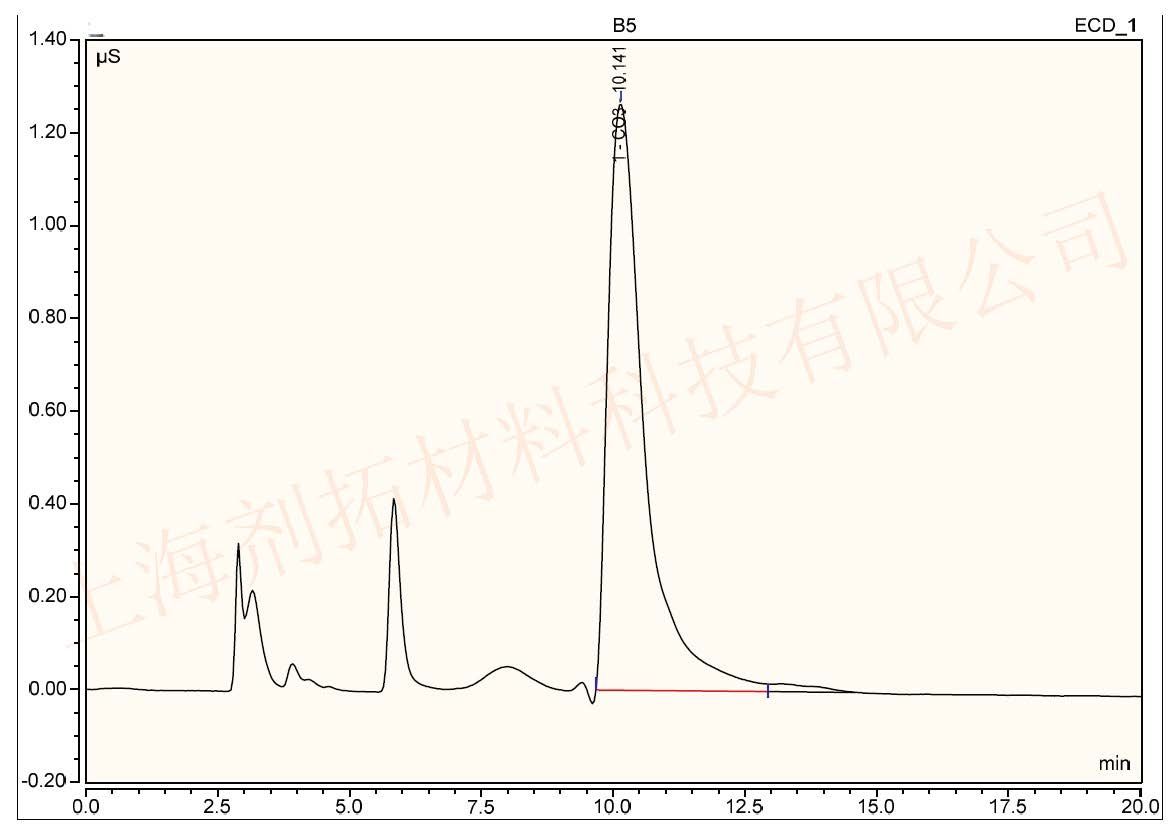
Testing Example
Reference Standards
- ISO 11206: 2011 "Water quality - Determination of dissolved bromate - Method using ion chromatography (IC) with post-column reaction (PCR)"
- ISO 19340: 2017 "Water quality - Determination of dissolved perchlorate - Method using ion chromatography (IC)"